
Small Business Management: Opportunity Recognition and Value Creation at Modo 25
Abstract
The entrepreneurship process is dynamic in the contemporary business era. Assessing small businesses and understanding the entrepreneurial spirit is essential to navigating the nature and characteristics of entrepreneurship further. Modo 25 is a dynamic and small venture with significant social value through education and empowerment. The company went out of the box to create the right balance between economic viability and social impact. The analysis navigated the nature and characteristics of entrepreneurship to understand this business and derive takeaways about entrepreneurial mindset and spirit. Examining the opportunity recognition and value proposition has also been the right approach to exploring Modo 25 as an entrepreneurial venture. Based on this crucial and detailed examination, some practical recommendations have been presented.
Introduction
Entrepreneurship is a process of creating new economic activity. Navigating this process is necessary to obtain insights regarding the social and economic value of the organization. This comprehensive analysis revolves around the nature and unique characteristics of the entrepreneurial process. The focus is on the small organization to discuss and navigate the context of entrepreneurship. This study will also evaluate the value proposition and opportunity in the enterprise setting. Based on this detailed analysis, practical recommendations will be made.
Business Overview
Modo 25 is a digital marketing organization. This organization has become a reliable in-house and marketing technology provider. The organization constantly strives to delegate power to the clients. The firm comprises an adequate product or service portfolio. This portfolio includes SEO marketing, digital marketing recruitment, paid search, paid social, conversion rate, and affiliate marketing. The firm has come up with a dynamic purpose and vision. For instance, the firm’s mission is to make the digital marketing world inside out. The organization intends to support, encourage, and boost the potential of its clients and employees to improve their fortune. Collaborative operations are in the spotlight as stakeholders strive for collaboration to resolve issues and set the foundation for innovative solutions (Modo 25, 2024). The firm has changed the concept of the agency model through this dynamic mission, purpose, and operational patterns. The organization is gaining popularity due to its “Ask Bosco” platform. This platform helps clients to manage their marketing budgets. The most important thing is to help clients evade potential risks in the marketing function as far as financial constraints are concerned. This platform has become a vital source of empowering in-house teams. Making teams take control of the marketing function has become a reality through this platform. A vibrant work climate, industry collaborations, and improved digital presence are critical success factors (Askbosco.io, 2024).
Modo 25 has created social value. For instance, the organization has depicted its commitment to education and empowerment to contribute to social development and well-being. The organization has collaborated with educational institutions and designed effective mentorship programs. The most important thing is empowering the youth to develop new skills. Modo’s commitment aligns with global initiatives to set the foundation for an equitable and knowledgeable society.
Industry Overview
The digital marketing industry is growing with time. The global digital marketing value reached almost $363.05 billion in 2023 (Expertmarketresearch.com, 2023). The growth rate is also incredible, as it remained at 13.1% at the start of 2024. Many small and large organizations have embraced digital marketing as a primary marketing strategy. For instance, almost 94% of digital marketers are using artificial intelligence in digital advertising. Digital marketing spending in the United Kingdom has reached almost £25.84 billion in 2022, and it represents nearly 44.5% of the advertising budget. Almost 89% of businesses in the United Kingdom use social media channels to reach their target audience. 77% of UK businesses have invested in search engine optimization to be visible and relevant in the dynamic and competitive market. Similarly, content marketing has become a potential trend, as almost 78% of customers are investing in this domain.
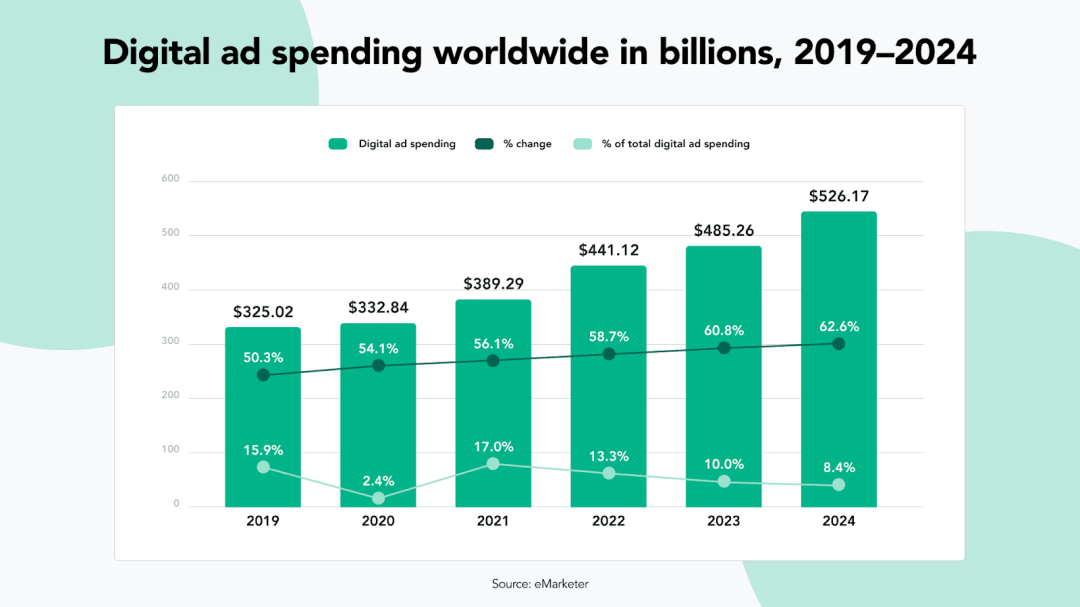
Digital ad spending worldwide in billions, 2019-2024
(Andersen, 2024)
Hence, the growth of digital marketing is apparent as corporations, including small and large entities, have emphasized it to enhance the visibility of attraction and positioning (Pavli, 2024). Modo 25 is one of the potential organizations that provide these services to its clients. The firm also has a social and environmental impact along with its economic responsibility. Keeping the essence of entrepreneurship in the business climate is integral, and it is what this organization has strived for.
The Context of Entrepreneurship
The context of entrepreneurship is apparent in the modern business era. The detailed illustration of the nature and characteristics of entrepreneurship, along with valuable insights and implications, is as follows.
Nature of Enterprise Activity
Social entrepreneurship is a creative extraction of social value, which further represents the process of bricolage. Social entrepreneurs play the role of change agents in society by embracing the mission to create and sustain social value. Modo 25 is pursuing new opportunities to serve the mission and set the foundation for ongoing innovation, learning, and adoption. It justifies social entrepreneurship, as the intention is always to create social value instead of just concentrating on private value (Usman et al., 2022). It has been revealed that the government needs to fulfill social needs and expectations effectively. The entrepreneur acts and strives for better outcomes to make a difference. It is the critical nature of the entrepreneur activity, and Modo 25 has reflected it in its intentions.
Purpose-Driven Approach and Collaborative Culture
Entrepreneurship is a purpose-driven approach. It is the nature of this concept, as Modo 25 operates with a clear purpose. The purpose is to create a balance between its purpose (social value) and profitability. Looking beyond the profits and empowering its clients justifies this nature of entrepreneurship. It is all about facilitating customers, employees, and stakeholders who contain less fortune. This purpose-driven venture has helped the organization set the foundation for excessive innovation and motivation. The collaborative culture is also included in entrepreneurship (Carballo, 2023). For example, Modo 25 empowered its in-house marketing teams through education. This social consideration has become a vital source of transformation. For instance, the company has realized that knowledge is a core function of society. This dedication begins with the in-house marketing team. The organization trains these people, conducts multiple workshops, and initiates several skill development programs (Ogamba, 2019). It is all about empowering these in-house marketing teams to grow in the changing business or marketing landscape. It is an excellent contribution to society, as it produces people who are equipped and have the potential to grow.
Risk Taking
Taking risks is also the nature of entrepreneurship. The critical assumption is that there must be a balanced risk-taking approach. Modo 25 is an excellent example of it, as it has taken calculated risks despite uncertainties in the business climate. The management usually assesses risks in terms of their probability, impact, responsibility, and possible mitigation to make well-informed decisions. Modo 25 is a risk-taking entity, as it goes beyond private value and profitability. Instead, it invests in education and empowerment to make people move forward in society (Steenkamp, Meyer and Bevan-Dye, 2024). Shareholder value has been minimized due to this educational commitment despite several risks (Llanos-Contreras, Alonso-Dos-Santos and Ribeiro-Soriano, 2020).
Innovation versus Replication
The nature of the venture can be understood from other perspectives as well. For instance, entrepreneurial ventures usually face the paradox of innovation versus replication. Many ventures are willing to introduce groundbreaking ideas or solutions, which further cause disruptions. On the other hand, some remain with the existing models to meet the needs of niche markets. Risk profiles and societal influence can be different, and it makes the nature of this concept dynamic (Zhuge et al., 2023).
Scalability and Localization
Similarly, regarding scalability and localization, some ventures are willing to contain rapid expansion and growth. Some of the ventures emphasize specific communities with their dynamic and tailored solutions. Interestingly, both considerations are interrelated with economic activities. However, strategies and resources, especially in terms of acquisition, mobilization, and allocation, are different (Massa et al., 2023). The paradox regarding social and commercial impact is also in the limelight. The ultimate objective may be to address social issues to set the ground for excessive profitability. Thus, creating the right balance between profitability and social impact is a significant challenge.
Characteristics of Enterprise Activity
Social Purpose
Commercial activities, such as making profits, have become secondary to justify social entrepreneurship. The behavior of the organization reflects giving something back to society or the community instead of taking all benefits. For instance, In Modo 25’s case, commitment to education and empowerment has streamlined the clear social purpose, which makes this business responsible (Lepoutre et al., 2013). Modo 25 has been in the limelight due to excessive facilitation for those who have less fortune. Modo 25 has enhanced its reputation by exemplifying this social responsibility. Intriguingly, this consideration has also helped the organization to target and attract socially conscious customers. Modo 25’s management is aware of the importance of responsible business (Peachey, 2020). Indeed, it is due to the changing consumer expectations. For example, in the contemporary business era, customers always want to know or understand the value behind the brand they usually buy. This is apparent when it comes to younger customers in society. Young customers or clients can perceive this value because Modo 25 is facilitating people who have less fortune. Revisiting profitability to education and empowerment and emphasizing the new partnership and plans are essential, and it is what Modo 25 has strived for in recent years (lecture 2). The organization’s commitment to supporting the less fortunate reflects the social responsibility of entrepreneurs. The company is willing to create a positive impact on society through education and empowerment. It is the best path for the organization to set the foundation for ethical and sustainable business practices. Of course, it can boost the firm’s reputation and help the company engage with socially and environmentally conscious customers (Agrawal and Kumar, 2018).
Engaging in Trade
The combination of adaptability and innovation is the best characteristic. Modo 25 has disrupted the conventional agency model through its innovative solutions. Management has realized that adaptability is the best way to gain and sustain a competitive advantage and fulfill its economic value. Entrepreneurship will be successful if entrepreneurs recognize the importance of experimentation and change, as these are always crucial facets of the trade. Modo 25 has been engaged in trade by providing in-house marketing and technology with the commitment to empower both clients and employees. The value of social responsibility in this trade engagement is also visible as small businesses are willing to reduce the risks. Entrepreneurship is all about identifying and exploiting opportunities, and it has been embedded in its nature (Ndubisi and Iftikhar, 2012). Of course, these opportunities are new ways to capture and create value. Modo should have noticed these opportunities, as they wanted to have rare knowledge in the industry and become disruptive. These opportunities have created means-end relations that disrupted the conventional agency business (lecture 1). These ventures strive to introduce new products and services to meet the varying needs and expectations of the clients. The most important thing is meeting needs that have never been met before. Modo 25 thinks out of the box about streamlining its unique services to its clients (Stephenson, 2019). Generating novel ideas is one of the main attributes that make this organization quite adaptive to the business climate. In entrepreneurial ventures, this innovative and developmental mindset has been depicted through technology, unique business models, and compelling marketing strategies (Kreiterling, 2023).
New Ways to Add Value
Another assumption is that entrepreneurship must be triggered by the ability to adopt. The most important thing is to stress innovative ways to create social value. For instance, it must look beyond the conventional education and empowerment initiatives. Instead, the venture must have the dynamic capabilities to learn and adapt to foster innovation. Modo 25 is more than capable of learning and adapting, especially according to the changing marketing conditions. Critically, it is challenging to build these capabilities as far as the resources are concerned in all ventures (Hoor et al., 2024).
Reinvesting Profits in New Social Venture
As discussed, Modo 25 is more than just concentrating on profitability. Instead of making profits, the organization reinvested in mentorship programs in the internal setting. The social purpose of this education initiative is to develop future leaders. Modo has fostered a culture of mentorship, and it invests in connecting with seasoned professionals. Conducting workshops and several networking events are good considerations for establishing a supportive ecosystem that further fosters knowledge sharing and development. Resource mobilization is an example of reinvesting profits (Anton et al., 2024). Being a small organization, Modo 25 has been resource-conservative, and the management can manage the limited resources effectively. Modo 25 has limited human capital, financial capital, and other tangible and intangible assets. Despite limitations and small business scalability, Modo 25 has shaped and implemented several strategies to acquire resources. Forming a strategic partnership can be a new possibility, as this strategic intent will improve its resource mobilization.
Involving Members in Governance and Accountability
Conscientiousness, self-efficacy, and openness to experience are several traits that contribute to success. Modo 25’s team is always willing to demonstrate these traits by involving members in its governance system. Members have been involved in decision-making, which fosters a sense of ownership, autonomy, and inclusion. This inclusion is also one of the ways to create social value, and valuing people in decision-making and problem-solving is critical. Eventually, the predictive value will also be an adequate characteristic (Pattanayak and Kakati, 2023). Typically, the success at Modo 25 has been partially attributed to the team’s traits. At Modo 25, there is a positive relationship between these traits and overall venture outcomes. It justifies the cognitive model of entrepreneurial behavior. It indicates how an entrepreneur thinks in the social and business setting. Modo 25’s ownership has demonstrated high intrinsic motivation and self-efficacy. These attributes are related to the firm’s performance and intentional practices (lecture 1)
Persistent and Achievement Oriented
Becoming achievement-oriented is also an acceptable characteristic. A client’s expectations and needs change with time. Consequently, comprehending and satisfying customers have become top priorities. Modo 25 can conduct market research and assess feedback to set the foundation for better changes to achieve its milestones, such as social development and empowerment through education.
Critical Aspects of Nature and Characteristics
Critically, when navigating Modo 25, there has been an oversimplification of the narrative. Typically, entrepreneurs have been perceived as lone heroes who overlook the importance of collaboration and the role of groups. Apart from this, the role of systems and external variables is also apparent. Modo 25 changed this narrative, as it emphasized teams, systems, and external influences to move forward. Another critical aspect is that the cult of a startup can be unfavorable as far as the intention to contain rapid growth and disruption is concerned. Of course, the probability of unethical and unsustainable practices is high, which can create a negative impact on society (Grieco, 2015). Thus, Modo 25 needs to concentrate on the broader influences or consequences of activities. Eventually, it has been perceived that entrepreneurial activity leans towards privileged groups and individuals. It always restrains the organization from finding new opportunities in the market and talent in the internal business climate. Again, the probability of the inequalities is high. Thus, Modo 25 must show its commitment to evade these imbalances through systematic charges.
The Opportunity and Value Proposition
Modo 25 aims to make digital marketing inside out. This theme interrelates with some opportunities and value propositions. It is essential to conduct a detailed examination of these opportunities and valued proposals to obtain valuable takeaways. The detailed illustration is as follows.
Opportunity Recognition
Demand for Purpose-Driven Solutions
Marlet is demanding purpose-driven solutions. Investors, customers, and employees intend to interact with organizations that think out of the box instead of just stressing profitability. Modo 25 has identified this opportunity by adhering to the social influence of the business model. It is all about moving to the segment that creates value for conscious customers. From the viewpoint of the business, digital marketing transformation is one of the most significant opportunities. The organization operates in the dynamic digital marketing industry. Businesses are learning to use online channels or e-commerce platforms to become more visible to their customers. Therefore, the demand for practical digital marketing approaches is increasing. Modo 25 has identified this opportunity, as it wants to be at the forefront of this transition. The industry landscape is changing. Reaching the target audience has become a top priority. In this context, Modo 25 is willing to streamline its innovative solutions to facilitate its clients. The critical assumption is that these solutions or services must be practical and innovative (Deakins and Freel, 2012).
Talent Attraction and Retention
Modo 25 is always willing to create social value through education and empowerment. Employees with more intrinsic values have varying expectations (González-Masip, Martín-de Castro and Hernández, 2019). Through this learning growth and culture, Modo 25 has retained passionate teams. The entrepreneurial domain indicates entrepreneurial spirit. Attracting innovative thinkers, visionaries, and problem solvers is the best approach to keeping the essence or soul. It is an essential consideration because Modo 25 is willing to attract people or individuals who can thrive in this dynamic business setting. People who strive to take calculated risks with a passion for doing something unique are good options for the organization. It indicates the entrepreneurial mindset, as the combination of adaptability, innovation, and creativity should be maintained. This opportunity can facilitate the organization’s reaching strange territories (Light, 2009).
Competitive Advantage
Despite its small size and limited scalability, it is an excellent opportunity to enhance collaborations with other players and promote its social value. This collaboration will lead to a competitive advantage in the industry. It is all about sharing people, processes, and technologies to improve the outcomes of this social value. Fostering creativity and innovation in education and empowerment is possible if the organization exploits this opportunity in the digital era. The collaborative nature has become a strategic advantage for this organization. The company incorporates a diverse range of talent to evade complicated issues and challenges. Of course, it is due to the culture of consistent learning. It is an excellent opportunity for Modo 25 to keep increasing cross-functional collaborations to be relevant in the industry. These cross-functional collaborations help the organization to align with the changing industry trends (Roper, 2012).
Value Proposition
In-House Marketing Technology: (Ask Bosco)
Ask Bosco is one of the prominent technology platforms of this organization. It interrelates with social values as far as education is concerned. This interrelates with real-time insights for in-house market members. The purpose is to enhance the marketing capabilities of the clients. Excessive education through this platform can increase autonomy at both the client and employee levels. The value proposition has been justified because informed decision-making reflected empowerment (Modo 25, 2024).
Mentorship Programs and Insights
Modo 25 has shown its commitment to mentorship. For instance, the value proposition has been validated by conducting workshops, webinars, and multiple networking events. Value is visible through education, as seasoned marketers typically share trends, expertise, and best practices. Marketers with limited resources get adequate and vast industry knowledge directly from these seasoned leaders. Mentorship has also been in the limelight as far as the increase in confidence level and network expansion is concerned. Marketers can set the foundation for good career growth (Bannister and Evans, 2023).
Shifting from the conventional agency to the new model is also a unique value proposition. Interestingly, the company has challenged the status quo and changed its model to become more influential. Adaptability, agility, and new viewpoints are part of this transition, and these are in the best interest of stakeholders.
Social Impact
Global Outreach and Scholarships
Modo 25 is an excellent example of entrepreneurship that strives for a fantastic social impact. For instance, global scholarship and outreach have become incredible contributors. Regarding education, the company creates opportunities for students who are unprivileged in the communities. These students can get scholarships and move forward with a better academic and career path. It is all about creating a ripple effect by making education accessible.
Employee Development
Empowering employees is a social cause that results in outstanding outcomes. The management usually encourages and identifies the potential of employees and moves forward with suitable interventions. Employees have exploited the opportunity to develop themselves in terms of skills and expertise. Modo 25 has established a positive work culture where mentorship is a primary source of learning. Investing time and resources in personal development and well-being is an excellent approach to justify the social impact (Roper, 2012).
Charitable Causes
Moreover, Modo 25 has engaged in multiple charitable causes. It also took several community initiatives at the local level. These community initiatives are in the spotlight, especially in the form of volunteering, awareness campaigns, and financial contributions. The ultimate objective is to create a positive impact on the local communities. Indeed, the mission to facilitate the less fortunate has been fulfilled through these community interventions (Modo25.com, 2024). The entrepreneurial mindset also shows social implications. Modo 25 has fostered an attitude that always encourages creativity and innovation. It also shows the ripple effect, as people have been inspired to shape their businesses (ventures) and become contributors to economic development.
Social Issues and Competitive Advantage
Porter, M. E., & Kramer (2011) unveiled the best connection between social issues and probable competitive advantage. The firm can enhance productivity and competitive advantage if it combines social and environmental interventions. This model stresses that the firm’s productivity increases when resource conservation, employee health, skill development, work safety, and sustainable practices are maintained (Dams, 2023). Modo 25 has shown its commitment to becoming resource-conservative and sustainable, and it justifies the application of this model (lecture 2). Another assumption for Modo 25 is that it must take its stakeholders seriously. Investing in employees is a critical consideration, and personal and professional growth is a reasonable justification for it. Preserving natural ecologies, taking the long view, empowering local communities, and enhancing collaboration with civil societies are the best ways to become more responsible and keep the essence of the positive environmental and social impact.
Corporate Shared Value
Corporate social responsibility has been an effective model or concept that can drive social and environmental responsibility. Modo 25 looks beyond it, as it fosters the corporate shared value. Instead of just doing good in terms of its value creation, the firm stressed societal and economic benefits relative to the cost. Community value creation has become a new norm, and Modo 25’s community initiatives at the local level are compelling enough to create an impact. Modo focuses on more than just social and environmental impact. Instead, it has made a better connection between profitability and social and environmental initiatives. The modern agency model is an excellent reflection of it. Initially, Modo 25’s agenda was not influenced by external factors, as it was cultivated internally through the entrepreneurial mindset (lecture 2).
The ultimate objective of Modo 25 is not to become a non-profit organization, as meeting economic responsibility is always one of the top priorities. Therefore, regarding the social and environmental impact, Modo 25 has become a sustainable enterprise that strives for the preservation of nature, life support, and community development. Indeed, the gain is broadly attributed to both economic and non-economic attainment for society, economy, and individuals (lecture 4)
These were some insights and implications regarding opportunity recognition, value proposition, social impact, and environmental impact. Modo 25’s performance in all these domains is moderate to high. The firm’s evolution will depend on its experience in the industry, and it can move forward with better interventions. Based on this detailed context, it is essential to present some critical recommendations to the company.
Recommendations
Enhancing its entrepreneurial dynamics should be the main aim of the organization in this dynamic business environment. Some of the practical recommendations for this organization, along with valuable implications, are as follows.
Becoming an Opportunist
First, Modo 25 needs to be specific or explicit about its corporate entrepreneurship typology. The above discussion streamlined the mixed or blended approach to economic and social benefits through business. Nonetheless, Wolcott and Lippitz (2007) presented the significant typology that can guide the organization to reach its identity (Light, 2009). For instance, regarding this model or typology, Modo 25 has been an enabler and producer. The firm emphasized financial resources (funding), and executives were aware of the importance of the prospective projects. Also, the firm has established a full-service group for corporate entrepreneurship.
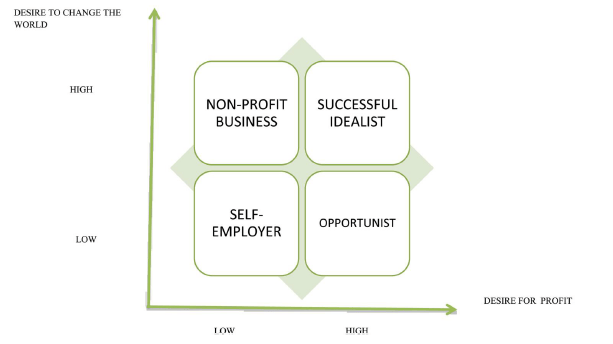
Typology of Green Entrepreneur
However, it is the best time to become an opportunist in the digital marketing industry to improve and make the brand identity more relevant. Modo 25 should become an opportunist by concentrating on both internal and external networks that can further drive concept selection and resource allocation. Again, the firm will challenge the conventional opportunistic approach, as the deliberated entrepreneurship approach must be preserved with these networks and resource allocation (Deakins and Freel, 2012).
Moving to Social Business
Modo 25 must move to the social business from a typical CSR approach. The company is willing to respond to external pressure to reduce social and environmental impact. However, Modo 25 must become a social business to become more deliberate. It is essential to combat more specific social issues or challenges (Ngo and Le, 2023). For example, when taking community-level initiatives, the firm must narrow its focus to issues such as poverty, unemployment, and health (lecture 5). It is all about carrying the broader scope to resolve critical or daunting social problems. Currently, the impact of the positive social and environmental effects may be limited. Becoming a social business can fill this gap. It can be added to the current entrepreneurial spirit, which can also justify the mission of helping people with less fortune.
Strategic Alliances/Partnerships
In the rapidly changing digital marketing industry, Modo 25 should be moving forward with new strategic alliances or partnerships. Sharing people, processes, and technologies through these strategic alliances can help the company identify new horizons for economic activities and social and environmental contributions. Currently, the company has a small scalability (size) with probable resource constraints (Das, 2021). Partnerships with other organizations can lead to product and service diversification to meet the varying needs of its clients. Additionally, these strategic partnerships can assist in becoming progressive in social and environmental contributions. Of course, resource acquisition, mobilization, and allocation will become more progressive, and it can help the company meet economically sustainable objectives (Amason, 2011).
Conclusion
It concludes that Modo 25 has the potential to maintain its social value through education and empowerment to keep the true essence of entrepreneurship. The above recommendations are practical and are created based on a comprehensive analysis regarding the nature of entrepreneurship, characteristics of entrepreneurship, opportunity recognition, and value proposition. However, Modo 25 should be more specific about these recommendations. As an opportunist, as discussed in the recommendation, it needs to align with the new trends and opportunities to improvise. Entrepreneurship should be flexible and resilient, and that is what Modo 25 will do in the future.
Reference List
Agrawal, A. and Kumar, P., 2018. Social Entrepreneurship and Sustainable Business Models: The Case of India. Springer.
Amason, A., 2011. Strategic Management: From Theory to Practice. Routledge.
Andersen, D., 2024. 35 Game-Changing Digital Marketing Statistics You Need to Know in 2024. [Online] Available at: https://www.invoca.com/blog/statistics-digital-marketers-need-to-know [Accessed 2 March 2024].
Anton, C.E. et al., 2024. Sustainable Entrepreneurship: Romanian Entrepreneurs’ Funding Sources in the Present-Day Context of Sustainability. Sustainability, 16(2), p.654.
Askbosco.io, 2024. AI powered reporting and forecasting for agencies and retailers. [Online] Available at: https://askbosco.io/?_gl=1*13rf2yv*_ga*OTY0MzUyMzIxLjE3MDg1OTI0Nzk.*_ga_E3K1Q69MWQ*MTcwODY4MTczOC40LjAuMTcwODY4MTczOC4wLjAuMA. [Accessed 3 March 2024].
Bannister, M. and Evans, J.W., 2023. Growing Entrepreneurial Communities. Journal of Business and Entrepreneurship, 33(1), pp.1-47,A-B.
Carballo, R.E., 2023. Purpose-driven transformation: a holistic organization design framework for integrating societal goals into companies. Journal of Organization Design, 12(4), pp.195-215.
Dams, J.G., 2023. Corporate Social Responsibility Management at URBASER. UCJC Business and Society Review, 78(1), pp.114-63.
Das, T.K., 2021. Managing the Partners in Strategic Alliances. Information Age Publishing, Incorporated.
Deakins, D. and Freel, M., 2012. Entrepreneurship and Small Firms 6e. McGraw Hill.
Expertmarketresearch.com, 2023. Global Digital Marketing Market Outlook. [Online] Available at: https://www.expertmarketresearch.com/reports/digital-marketing-market [Accessed 5 March 2024].
González-Masip, J., Martín-de Castro, G. and Hernández, A., 2019. Inter-organisational knowledge spillovers: attracting talent in science and technology parks and corporate social responsibility practices. Journal of Knowledge Management, 23(5), pp.975-97.
Grieco, C., 2015. Assessing Social Impact of Social Enterprises: Does One Size Really Fit All? Springer.
Hoor, A. et al., 2024. Role of Technological Innovation and Its Governance in Entrepreneurial Evolution. International Journal of Electronic Government Research, 20(1), pp.1-25.
Kreiterling, C., 2023. Digital innovation and entrepreneurship: a review of challenges in competitive markets. Journal of Innovation and Entrepreneurship; Heidelberg, 12(1), p.49.
Lepoutre, J., Justo, R., Terjesen, S. and Bosma, N., 2013. Designing a global standardized methodology for measuring social entrepreneurship activity: the Global Entrepreneurship Monitor social entrepreneurship study. Small Business Economics, 40(3), pp.693-714.
Light, P.C., 2009. The Search for Social Entrepreneurship. Rowman & Littlefield.
Llanos-Contreras, O., Alonso-Dos-Santos, M. and Ribeiro-Soriano, D., 2020. Entrepreneurship and risk-taking in a post-disaster scenario. International Entrepreneurship and Management Journal, 16(1), pp.221-37.
Massa, S., Annosi, M.C., Marchegiani, L. and Petruzzelli, A.M., 2023. Digital technologies and knowledge processes: new emerging strategies in international business. A systematic literature review. Journal of Knowledge Management, 27(11), pp.330-87.
Modo 25, 2024. Modo 25. [Online] Available at: https://modo25.com/about/ [Accessed 6 March 2024].
Modo25.com, 2024. About. [Online] Available at: https://modo25.com/about/ [Accessed 4 March 2024].
Ndubisi, N.O. and Iftikhar, K., 2012. Relationship between entrepreneurship, innovation and performance: Comparing small and medium-size enterprises. Journal of Research in Marketing and Entrepreneurship, 14(2), pp.214-36.
Ngo, Q.H. and Le, T.T., 2023. Role of corporate social responsibility on firm performance in emerging economy: The mediating role of access to finance and business model innovation. Cogent Business & Management, 10(2).
Ogamba, I.K., 2019. Millennials empowerment: youth entrepreneurship for sustainable development. World Journal of Entrepreneurship, Management and Sustainable Development, 15(3), pp.267-78.
Pattanayak, S. and Kakati, M., 2023. An empirical study on entrepreneurial traits and their impact on enterprise success. XIMB Journal of Management, 20(2), pp.277-91.
Pavli, M., 2024. 20 Amazing Facts about Digital Marketing in the UK [2024]. [Online] Available at: https://searchhog.co.uk/digital-marketing-facts-uk/ [Accessed 5 March 2024].
Peachey, J., 2020. My Startup: Modo25, Leeds. [Online] Available at: https://www.prolificnorth.co.uk/feature/my-startup-modo25-leeds/ [Accessed 3 March 2024].
Roper, S., 2012. Entrepreneurship: A Global Perspective. Routledge.
Steenkamp, A., Meyer, N. and Bevan-Dye, A.L., 2024. Self-esteem, need for achievement, risk-taking propensity and consequent entrepreneurial intentions. The Southern African Journal of Entrepreneurship and Small Business Management, 16(1).
Stephenson, J., 2019. 25 Common Characteristics of Successful Entrepreneurs. [Online] Available at: https://www.entrepreneur.com/leadership/25-common-characteristics-of-successful-entrepreneurs/299545 [Accessed 29 February 2024].
Usman, S., Masood, F., Khan, M.A. and Khan, N.u.R., 2022. Impact of empathy, perceived social impact, social worth and social network on the social entrepreneurial intention in socio-economic projects. Journal of Entrepreneurship in Emerging Economies, 14(1), pp.65-92.
Zhuge, K., He, H., Yuan, Y. and Sun, P., 2023. Can adopting lean startup strategy promote the sustainable development of new ventures? The mediating role of organizational iterative learning. PLoS One, 18(8), p.e0290849.